
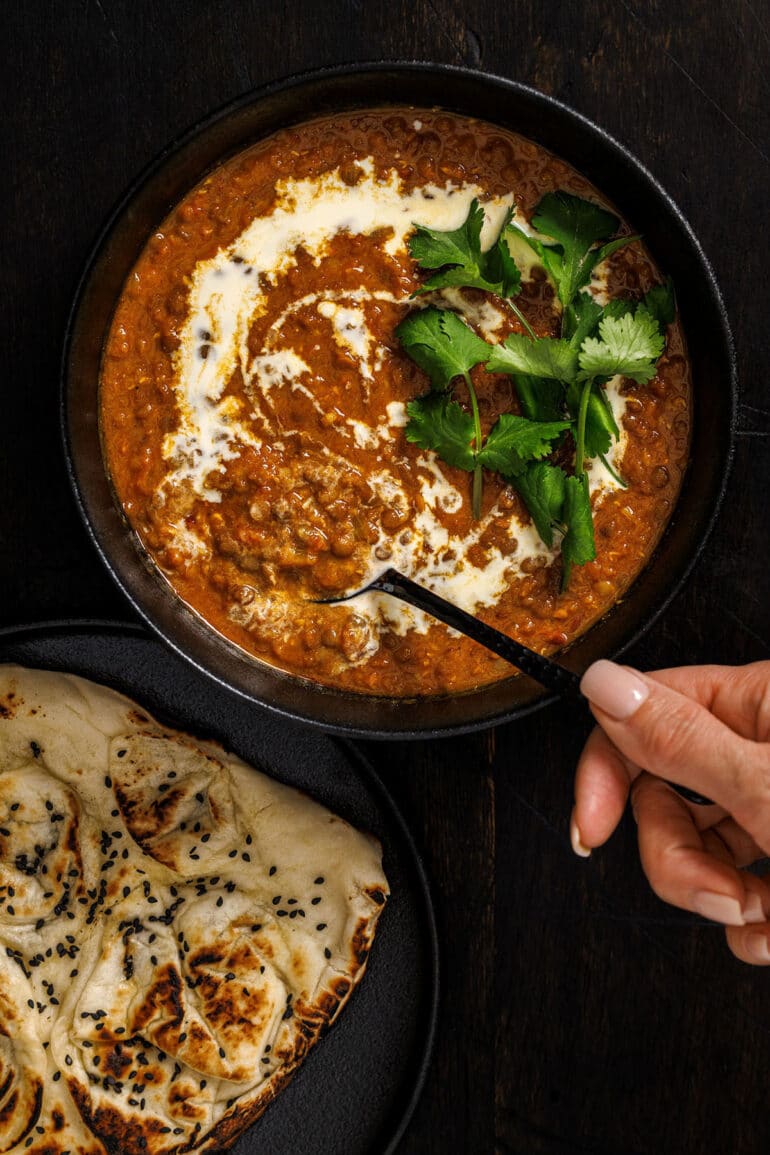
Skinnymixer’s Dal Makhani (Buttery Lentils) features in the Chef Specials section of the cookbook SkinnyAsia 2.

Methods: Thermo cooker + Conventional
Best prepared: Start soaking the night before
Texture: Thick, rich and creamy
Which Lentils Do I Need for Dal Makhani?
This is probably the most important thing to understand before you go shopping.
Traditionally, Dal Makhani is made with whole black urad dal, also known as whole black gram.
Depending on where you’re shopping, you may see different names on the packet.
Look for:
- Whole black urad dal
- Whole urad
- Black gram
- Sabut urad
You’ll have the best chance of finding it at an Indian or South Asian grocer.
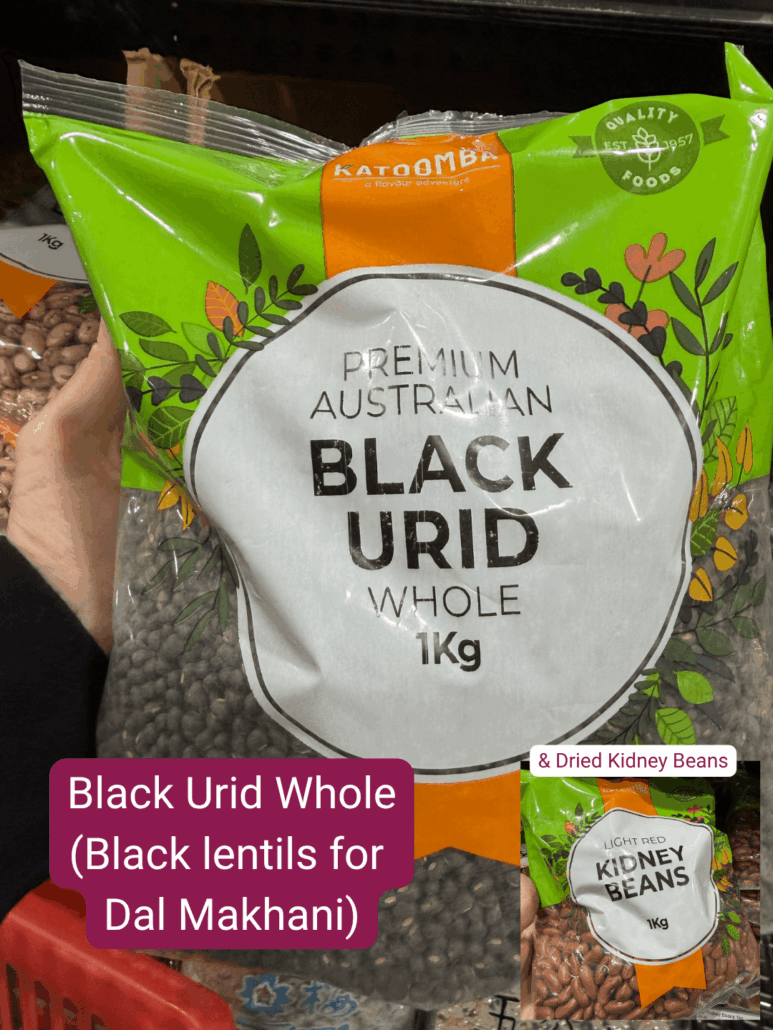
What if My Packet Just Says Black Lentils?
Products labelled simply black lentils can vary.
If you can find whole black urad dal, that’s our first choice.
If you’re using another type of whole black lentil, pay particular attention to texture rather than relying entirely on the cooking time.
The lentils need to become extremely soft before you move on to the next stage.
Don’t Confuse Them with Beluga Lentils
Black beluga lentils are another small black lentil you may see in supermarkets.
They’re prized for holding their shape in salads and other dishes.
That’s almost the opposite of what we’re trying to achieve here.
For Dal Makhani, we WANT lentils that become very soft and creamy with long cooking.
For the best result, seek out whole black urad dal.
Why Do I Need to Soak the Lentils and Kidney Beans?
The dried lentils and kidney beans need to soak for at least 6 hours or overnight before cooking.
Soaking helps hydrate them before their long cook and promotes more even softening.
Place them in a large bowl with plenty of water above them because they’ll absorb water and expand as they sit.
The recipe specifies approximately 7.5 cm or 3 inches of water above the beans.
After soaking, drain and rinse them and discard the soaking water.
Then they’re ready to cook in fresh water.
Overnight is Easiest
If you’re making Dal Makhani tomorrow, put the lentils and kidney beans into water before you go to bed.
The next day they’re ready to rinse and cook.
It makes the long preparation sound much less intimidating because the soaking itself requires almost no effort.
How Soft Should the Lentils and Beans Be?
VERY soft.
This is important.
The first cooking stage isn’t finished simply because the timer says 60 minutes.
Take one of the lentils and press it against the back of a spoon.
It should mash easily without a firm or gritty centre.
Depending on the particular lentils and beans you’re using, they may need an additional 10–20 minutes or longer.
Dried legumes can vary considerably in cooking time depending on their type and age.
Use the recipe time as your guide, but use texture as the final test.
Why Might My Lentils Take Longer?
If your lentils and kidney beans aren’t softening within the suggested time, don’t panic.
Factors that can affect cooking time include:
- The type of lentil
- How old the dried legumes are
- How long they were soaked
- Your particular appliance
- Water hardness
Simply continue cooking until they’re properly soft.
Trying to rush ahead with undercooked lentils will affect the final creamy texture.
What is Kashmiri Chilli Powder?
Kashmiri chilli powder is commonly used in Indian cooking for its vibrant red colour and relatively gentle chilli heatcompared with many hotter chilli powders.
If you don’t have it, we’ve included an easy substitute in the recipe:
½ tsp sweet paprika + ½ tsp chilli powder
Keep in mind that chilli powders vary in heat, so adjust according to the product you’re using and your family’s preferences.
Can I Make Dal Makhani Ahead?
Yes, and this is a fantastic recipe to prepare ahead.
Like many slow-cooked dishes, the flavours have time to settle and develop after cooking.
When reheating, you’ll probably find the dal has thickened considerably in the fridge.
Add a splash of water or cream as required, then reheat gently while stirring until piping hot.
Dietary & Recipe Variations
GLUTEN FREE
The core ingredients are naturally gluten free, but check your Stock Concentrate and any packaged spices or accompaniments as required.
DAIRY FREE
Use dairy-free butter and cream alternatives as specified in the recipe.
SUPER SKINNY
Use low-fat cream and omit the additional butter when serving.
VEGETARIAN
Dal Makhani is already meat-free. Use Vegetable Stock Concentrate if required for your dietary preferences.
HALVED / DOUBLED
This recipe can be halved or doubled using the conventional method. Adjust the cooking water as required to keep the lentils and kidney beans generously covered during their initial cook.
What to Serve with Dal Makhani
This is the kind of dish that begs for something to scoop up all that creamy sauce.
Try it with:
- Golden Coconut Rice
- Garlic naan
- Cauliflower rice
Or make it part of a larger SkinnyAsia 2 Indian feast with:
- Slow Cooked Rogan Josh
- Kachumber Salad
- Golden Coconut Rice
- Roast Tandoori Chicken
- Kasundi
It also works beautifully as the vegetarian centrepiece of the meal rather than simply a side dish.
Get the Recipe
The complete Dal Makhani (Buttery Lentils) recipe, including Thermo cooker and conventional methods, soaking and cooking instructions and dietary variations, is available in SkinnyAsia 2.
From the Testing Team
- Rhonda R. – This is the bomb!!
- Jodi H. – Made using the Conventional method. Looking forward to making this in the thermomix next time! I loved it! I had it with the golden rice, perfect pair! 1 green chilli was plenty hot enough for me!
- Amanda E. – Oh my lawd!! I absolutely love this!!! I made it last night as lil dude had a footy game at 6pm so we needed an early dinner. It is a process, but totally worth it!! So yum!!!
- Kaz M. – We LOVE this! Like, we could eat it as a main or a side and be happy! I served it last night with the roast tandoori chicken, kasundi and this, everyone ate every last mouthful on their plates. Even the carnivore ate a big serving and said how good it was. I’m just having some now for lunch and it’s even better after being in the fridge overnight
 … ps. I should have read the whole recipe before deciding to start cooking this at 7pm
- Veronica B. – I’ve never had Dal before and surprisingly I really enjoyed it, nice as a side dish for me as I really love meat
- Deb D. – I got my Whole Black Urid delivered from Woolies $4 for 1kg
Some other Vegetarian Indian Thermomix recipes you might love:
Want to know more about SkinnyAsia 2 cookbook?
SkinnyAsia 2 is a collection of Thermomix & Conventional cooking recipes. All of our cookbooks have a strong focus on Dairy-free, Gluten-free, Nut-free, Egg Free, Low Carb, Paleo, Vegetarian and Low FODMAP.

Ingredients
- butter
- Stock Concentrate
- dried black lentils
- dried red kidney beans
- salt
- tin diced tomatoes
- tomato paste
- fresh ginger
- garlic
- brown onion
- green chilli
- coriander powder
- cumin powder
- garam masala
- Kashmiri chilli powder
- turmeric powder
- butter or ghee
- thickened cream
Instructions
- This recipe is exclusive to the SkinnyAsia 2 cookbook.
FAQs
Can I use ordinary black lentils instead of whole black urad dal?
For the best Dal Makhani, look for whole black urad dal (whole black gram or sabut urad), usually available from Indian or South Asian grocers. Other black lentils can have different cooking characteristics and may not break down into the same creamy texture. Whatever you use, don’t move on until the lentils are extremely soft and easily mash against the back of a spoon.
Why is my Dal Makhani not thick and creamy?
The lentils may need more cooking. They should be extremely soft before the second simmer, then slowly cooked again so they begin breaking down and releasing starch. Finally, lightly mash or blend a portion of the dal and stir it back through. This combination creates the characteristic thick, velvety texture.