
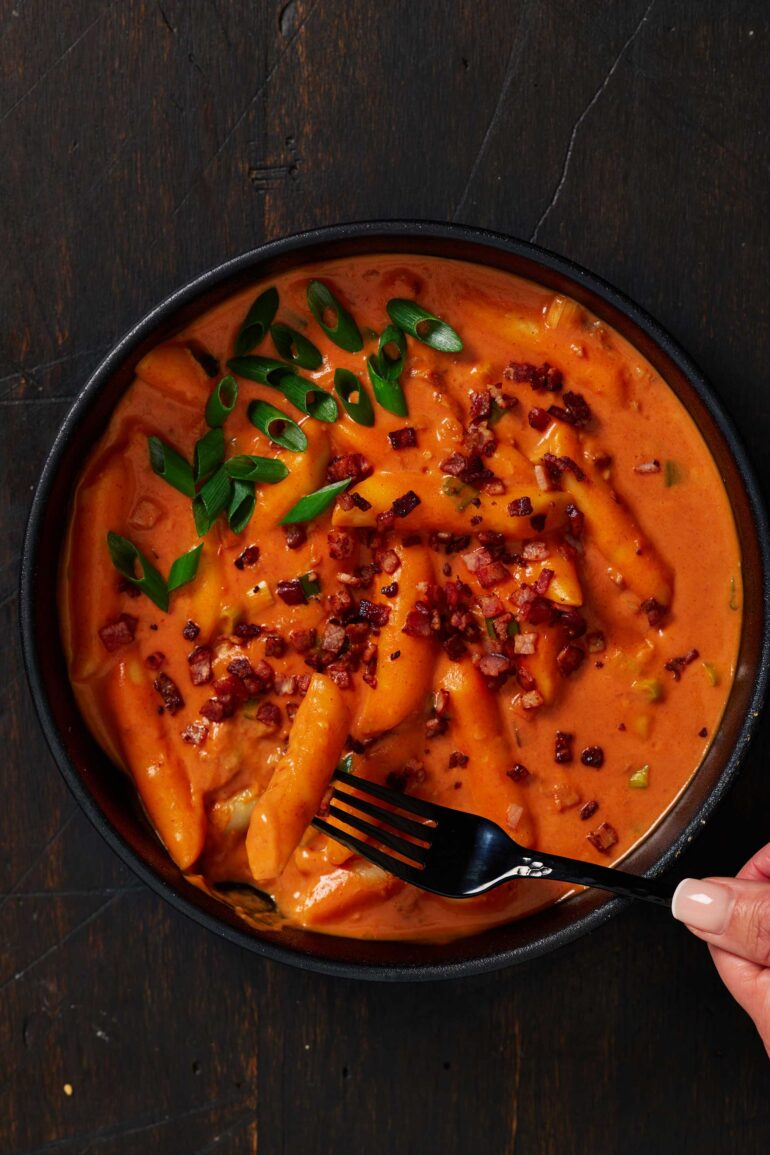
Skinnymixer’s Rosé Tteokbokki (Korean Rice Cakes) features in the Takeaway section of the SkinnyAsia 2 cookbook.
If you’ve never tried Tteokbokki before, our creamy Rosé version is a very good place to start.
Soft and chewy Korean rice cakes are simmered in a creamy gochujang sauce with garlic, bacon, tomato, honey, cream and a little mozzarella.
The result is savoury, creamy, slightly sweet and as spicy as you want to make it.
And if you’ve never cooked Korean rice cakes before, don’t worry. They’re surprisingly easy to prepare, and we’ve included plenty of tips to help you find the right rice cakes and choose a gochujang that suits your preferred heat level.
What is Tteokbokki?
Tteokbokki is a popular Korean dish made with tteok, chewy Korean rice cakes.
Traditional versions are commonly served in a spicy red sauce made with gochujang, giving the dish its characteristic colour, sweetness and chilli flavour.
The rice cakes themselves have a wonderfully soft, dense and chewy texture and absorb the flavour of the sauce as they cook.
What is Rosé Tteokbokki?
Rosé Tteokbokki is a creamier variation of Tteokbokki.
Rather than serving the rice cakes in a predominantly spicy gochujang sauce, cream is added to mellow the chilli and create a rich, creamy sauce.
Our SkinnyAsia 2 version combines gochujang, tomato paste, honey and soy sauce with cream and Chicken Stock Concentrate, then adds bacon and mozzarella for even more savoury flavour.
So despite the name, there’s no rosé wine involved!
What Does Rosé Tteokbokki Taste Like?
It’s a combination of creamy, savoury, sweet and spicy.
Gochujang brings chilli, sweetness and fermented savoury flavour, while tomato paste and honey balance the sauce.
Bacon adds saltiness and mozzarella melts through at the end for extra creaminess.
And then there are the rice cakes themselves. They’re mild in flavour but wonderfully chewy, so they’re perfect for soaking up all that sauce.
What ingredients you will need
The complete quantities and methods are in SkinnyAsia 2, but the main ingredients include:
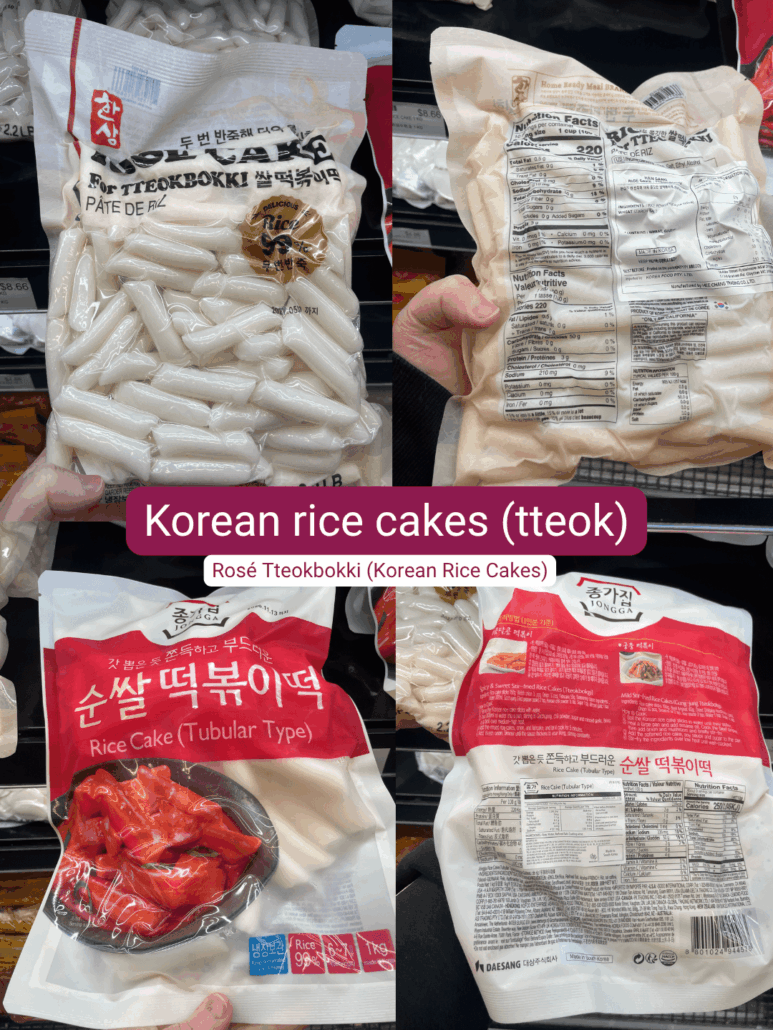
- Korean rice cakes (tteok) – often labelled tteokbokki tteok, tteokbokki rice cakes or Korean rice cakes.
- Gochujang paste – (gluten-free if required) The Woolworths gochujang is spicer but gluten-free. The Coles one is milder.
- Bacon
- Garlic
- Tomato paste
- Honey
- Soy sauce, tamari or coconut aminos
- Thickened cream of choice – for dairy-free we like Flora for no coconut flavour
- Chicken Stock Concentrate
- Mozzarella
- Spring onion
Where Do I Buy Korean Rice Cakes?
Look for Korean rice cakes labelled tteok or tteokbokki rice cakes at Korean and Asian supermarkets.
Depending on where you shop, you may find them fresh, refrigerated or frozen.
We’ve used 500 g in this recipe.
What Texture Should Tteokbokki Rice Cakes Have?
This is important if you’ve never eaten them before.
Korean rice cakes aren’t supposed to have the texture of pasta or gnocchi. They should be soft but distinctly chewy.
As they simmer in the Rosé sauce, they’ll soften while retaining that characteristic bounce and chew.
If your rice cakes are still hard in the centre, give them a little longer to cook.
Choosing the Right Gochujang Heat Level
Not all gochujang is the same heat level. Depending on the brand, you may find mild, medium, hot or very hot varieties, so it’s worth checking the packaging before adding it to your Rosé Tteokbokki.
The recipe gives you a range of 20–50 g gochujang so you can adjust the sauce to your taste.
For a milder, family-friendly Tteokbokki:
Start with 20 g gochujang. The cream, tomato paste, honey and mozzarella also help soften the chilli heat.
For medium heat:
Try around 30–35 g gochujang.
For a stronger gochujang flavour and more heat:
Use up to 50 g, depending on the heat rating of your gochujang.

How to Check How Spicy Your Gochujang Is
Some Korean gochujang packaging uses a heat-level scale to show how spicy the paste is. Check the front or back of the tub for a chilli or heat indicator.
If you’re using a brand you haven’t tried before, taste a tiny amount first. Gochujang is concentrated, so you only need a little to get an idea of the heat.
Remember that the finished Rosé Tteokbokki will taste considerably milder than the gochujang does straight from the tub because it is mixed with cream and the other sauce ingredients.
Which Gochujang Should I Buy?
Look for Korean gochujang (fermented red chilli paste) in the Asian section of larger supermarkets or at an Asian or Korean grocer.
If you’re cooking for children or anyone sensitive to chilli, choose a mild gochujang where possible.
If you need the recipe to be gluten free, check the ingredients carefully. Gochujang ingredients vary between brands and not all varieties are gluten free.
Where Can I Buy Gochujang?
Gochujang paste is becoming much easier to find in Australia. Look for it in the Asian or international foods aisle at major supermarkets, as well as Asian and Korean grocery stores. You can also buy it online.
The Gochujang Paste found in Coles is quite mild in flavour but isn’t gluten-free. The Gochujang Paste found in Woolworths is much hotter but is gluten-free.
Gochujang is traditionally sold in a red tub, but you’ll also find it in jars, bottles and squeeze packs depending on the brand.
Gluten-free tip: Not all gochujang is gluten-free, so always check the ingredients and allergen information if you need a gluten-free option.
Can I make my own Gochujang?
Absolutely! We have a guest recipe from Brooke to make your own dietary friendly Gochujang Paste.
Buying Korean Rice Cakes (Tteok)
For this recipe you need 500 g Korean rice cakes, often labelled tteokbokki tteok, tteokbokki rice cakes or Korean rice cakes.
You’ll usually find them at Korean or Asian grocers, either refrigerated or frozen.
The long cylindrical rice cakes are ideal for this recipe.
If using frozen rice cakes, soak them in warm water for 15–30 minutes before cooking, then drain well.
How to Prepare Rice Cakes for Rosé Tteokbokki
Korean rice cakes can vary considerably between brands, and we found this during testing too! Some frozen rice cakes benefited from soaking, while others became too soft or started to split.
For the best results, check the packet instructions for your particular rice cakes first.
Fresh or Refrigerated Rice Cakes
If your rice cakes are already soft and pliable, separate them and add them directly to the sauce.
If they’re firm or stuck together, a brief soak in cool or lukewarm water can help separate them.
Frozen Rice Cakes
Don’t automatically soak frozen rice cakes in warm water for 15–30 minutes.
Some varieties can become waterlogged, soften unevenly or split during a longer warm-water soak.
Instead:
- Check the packet directions first.
- If the rice cakes separate easily, they may be able to go straight into the recipe.
- If they’re frozen together, briefly soak them in cool or lukewarm water just until you can separate them.
- Drain well before adding to the sauce.
- If the packet specifically instructs you to soak or boil them first, follow those directions.
Cook to Texture, Not Just Time
Once added to the Rosé sauce, cook the rice cakes until they’re soft, chewy and bouncy with no hard centre.
Start checking them after approximately 5 minutes. Depending on the brand and style, they may need longer than the recipe indicates.
If the rice cakes need more cooking but your sauce is becoming too thick, add a small splash of water and continue cooking.
Why Are My Rice Cakes Splitting?
If your rice cakes split during soaking, remove and drain them rather than continuing to soak.
They’re already taking on enough moisture and are likely to soften further once added to the hot sauce.
Next time, skip the long warm-water soak and either use them directly or soak them briefly in cooler water just until separated.
Can I Reheat Tteokbokki?
Yes, but don’t be surprised if the sauce and rice cakes firm up considerably in the fridge.
Store leftovers in an airtight container for up to 3 days.
To reheat, add 2–4 tablespoons of milk or water and gently warm in a saucepan over medium-low heat, stirring until the sauce becomes creamy again and the rice cakes soften.
You can also microwave leftovers with a splash of milk or water, stirring every 30 seconds until heated through.
Dietary & Recipe Variations
SUPER SKINNY
Use shortcut bacon and the lower amount of gochujang. Replace the cream with blended cottage cheese and omit the mozzarella.
VEGETARIAN
Omit the bacon and use Vegetable Stock Concentrate.
LOW FODMAP
Omit the garlic and use garlic-infused olive oil instead of butter. Use compliant sauces and Stock Concentrate, maple syrup instead of honey and only the green part of spring onion. We’ve also included an alternative to gochujang.
HALVED / DOUBLED
When halving in the Thermo cooker, start checking the rice cakes after 5 minutes. For a double batch, use the conventional method.
What to Serve with Rosé Tteokbokki
Rosé Tteokbokki is fantastic served straight from the pan while the rice cakes are hot and beautifully chewy.
Finish with:
- Sliced spring onion
- Crispy bacon
- Extra mozzarella if you’re feeling indulgent
Or make it part of a bigger Korean feast with some of the other Korean-inspired recipes from SkinnyAsia 2.
Get the Recipe
The complete Rosé Tteokbokki (Korean Rice Cakes) recipe, including Thermo cooker and conventional methods, dietary variations, storage and reheating instructions and our gochujang heat guide, is available in SkinnyAsia 2.
From the Testing Team
- Deb D. – If anyone gets stuck, the Wokka brand is about 210g per pack of rice cake – the sauce packs are separate (Woolies) and even further desperation the Buldak cups have the rice cakes seperate as well. 4 snack size serves or 2 normal serves. If you like the instant Buldak rice bowls you will like this as it’s creamier and cheesier.
- Kaz M. – A bazillion out of 10 from the kids on this one!!
- Susan R. – I approached this one with trepidation! I never heard of these rice cakes in all my puff!! Absolutely shovelled them in! Such different textures. Chewy, creamy, crunchy and that zing from the gochujang

- Lee S. – It was absolutely delicious and plates cleaned here tonight!!
- Julie H. – Wow never had anything like this before. Very tasty really really nice. Different texture

- Veronica B. – Tested this today and wow how delicious is it!! Yum
 I used shelf stable brand and only cooked for 4mins not the full 8 mins, the texture was soft and chewy, I really enjoyed this recipe, so different to what I usually have and probably would never had tried these before, I’m so happy to have tested this recipe yummmm so delicious thankyou
 - Kate Y. – Found the rice cakes today in an Asian supermarket, so had to try it tonight, and oh wow it was so good. Husband had 2 bowls AFTER eating a bowl of honey mustard chicken that the kids all got for dinner. My daughter liked a small amount but then it was too spicy for her.
- Lauren H. – Omg this is amazing…. This is the 3rd recipe from the new book I have tried and love them all.
- Nadine D. – Just made this as my daughter who has been asking constantly for it. I purchased the rice sticks fresh in the fridge at an Asian grocer. I cooked the full time and none broke up and were soft and chewy. My daughter loved it, I thought it was nice but I had an issue texturally and couldn’t get through mine, but that is an issue with me and some textures

- Kacie E. – Such a different dish, tastes like Korean Mac and cheese crossed with tinned spaghetti! But I’m here for it! Tastes like great hangover food!!
Some other Korean Thermomix recipes you might love:
Want to know more about SkinnyAsia 2 cookbook?
SkinnyAsia 2 is a collection of Thermomix & Conventional cooking recipes. All of our cookbooks have a strong focus on Dairy-free, Gluten-free, Nut-free, Egg Free, Low Carb, Paleo, Vegetarian and Low FODMAP.

Ingredients
- 150 g shortcut bacon
- Korean rice cakes
- Chicken Stock Concentrate
- gochujang paste
- honey
- soy sauce
- tomato paste
- garlic
- spring onion
- butter
- mozzarella
- thickened cream
Instructions
- This recipe is exclusive to the SkinnyAsia 2 cookbook.
FAQs
I’ve never eaten Korean rice cakes. What do they taste like?
Korean rice cakes have a mild flavour and a distinctive soft, chewy texture. They don’t have a strong flavour on their own, which makes them perfect for soaking up the creamy gochujang sauce in this recipe.
Is Rosé Tteokbokki very spicy?
It doesn’t have to be. We’ve given you a range of 20–50 g gochujang, so you can adjust the heat to suit your taste. Gochujang also comes in different heat levels, so start with less if you’re unsure. The cream and mozzarella also help mellow the chilli.